
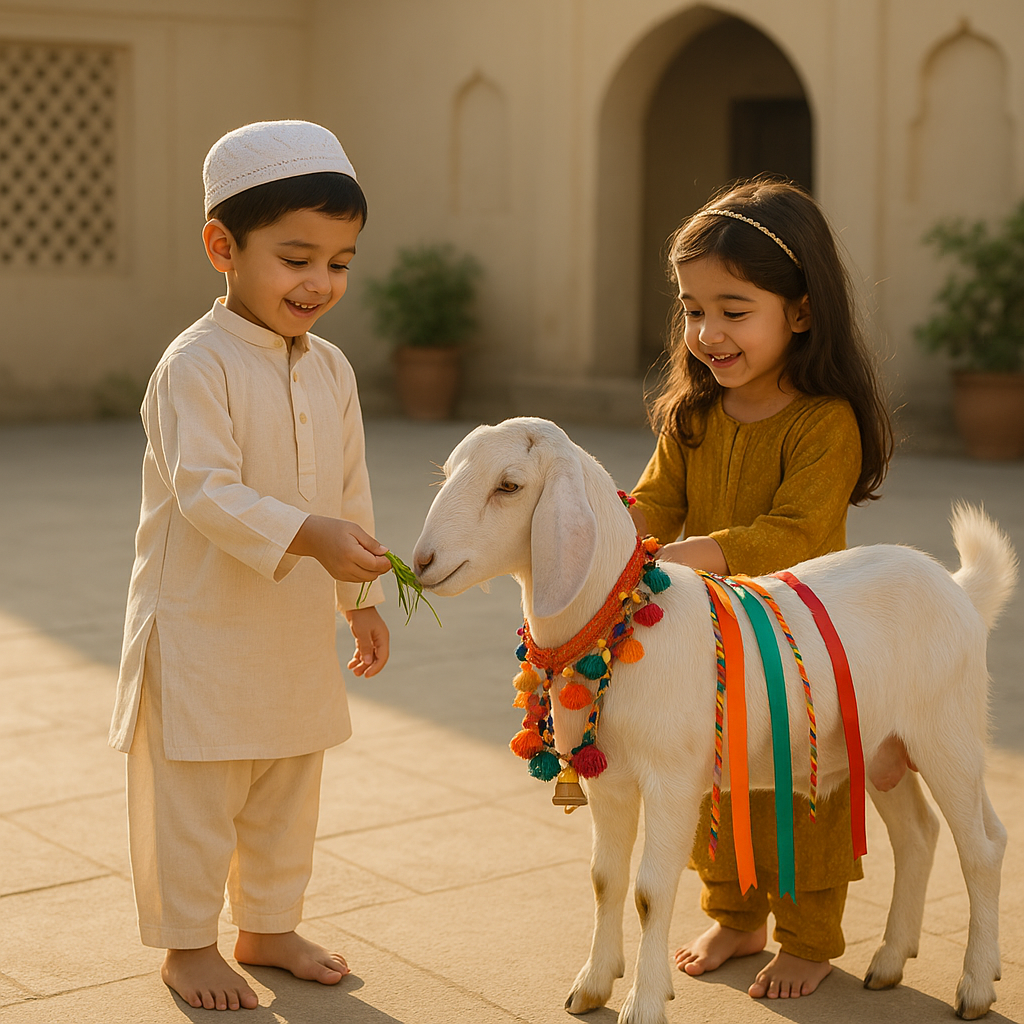
The Eid al-Adha sacrifice teaches patience, devotion, and giving up what we love for Allah’s pleasure. It reminds Muslims of Prophet Ibrahim’s great sacrifice and strengthens faith in every heart.
Eid al-Adha teaches us about sacrifice, patience, and giving up something precious for the sake of Allah’s pleasure. This day reminds us of the great sacrifice of Prophet Ibrahim (peace be upon him), which strengthens the faith of every Muslim.
Eid al-Adha is connected to the important act of Hajj, which is one of the five pillars of Islam and holds great significance. For Muslims, Eid al-Adha is a lesson in patience and sacrifice. On this day, Muslims sacrifice their favorite animals — the ones they have raised with care like their own children — in the way of Allah. According to the sayings of the Prophet (peace be upon him), those who sacrifice will have their mounts in Paradise. Eid al-Adha is not just about sacrifice; it reminds us of the great event between Prophet Ibrahim and his son, Prophet Ismail. In this article, we will discuss all these points and explain how Eid al-Adha unites the Muslim community and tests the hearts of all Muslims in patience and sacrifice.

The Tradition of Prophet Ibrahim (peace be upon him)
The true spirit of Eid al-Adha lies in the sacrifice of Prophet Ibrahim (peace be upon him), which he offered by the command of Allah. The story goes that Prophet Ibrahim saw in a dream that he was sacrificing his beloved son, Prophet Ismail. The next morning, he shared this dream with his son and told him about it. He said it seemed like Allah had commanded him to do this. Prophet Ibrahim asked his son to obey Allah’s command. Prophet Ismail responded by saying that his father should blindfold himself because the best will is Allah’s will, and they should be content with that. Prophet Ibrahim blindfolded himself and was about to sacrifice his son, but before he could do so, the angel Jibrael (Gabriel) came down and brought a ram in place of Ismail. When Prophet Ibrahim removed the blindfold, he saw a living animal had been sacrificed instead. Allah then gave Prophet Ibrahim glad tidings that He had accepted his sacrifice and made this event a tradition for generations to come. Allah commanded that the ram be eaten and shared with relatives and the poor. Thus, the spirit of sacrificing a beloved one in the way of Allah became a tradition among Muslims, showing the example of love and patience shown by Prophet Ibrahim.
The Importance and Virtue of Sacrifice
Sacrifice is not just about slaughtering an animal; there is a deeper meaning behind it. Allah says in the Holy Quran that neither the meat nor the blood of the sacrifice reaches Him; what matters is your piety. The purpose of sacrifice is not the animal itself but the devotion and righteousness of the person. Allah tests people to see what they are willing to give up for His sake. The main goal of sacrifice is to gain taqwa (God-consciousness) and strengthen one’s faith.
Eid Morning: Cleanliness, Fragrance, and Proper Dress
Eid teaches more than just slaughtering an animal. Islam also commands that a person be clean and neat and perform the Eid prayer. After the Fajr prayer (early morning prayer), one should wait for the time to perform Eid prayer. Before going to the mosque for Eid prayer, one should wear clean clothes, apply good perfume, and prepare oneself well. After offering prayers and worship in the mosque, one returns home. It is best to slaughter your own animal if possible; if not, hire a butcher but remind him to say Allah’s name before slaughtering, otherwise the sacrifice will not be accepted. This act not only tests patience but also provides livelihood for many people.

A Source of Livelihood
Sacrifice provides help through the meat distributed, but it also supports millions of people’s livelihoods. When a wealthy Muslim buys an animal, the first thing needed is feed, which is bought from the feed sellers, helping their livelihood. Then the butcher’s work begins on the day of sacrifice, supporting many poor families. So, sacrifice is not only an act of worship but also a source of income for many. Therefore, every year, those who are financially able should perform sacrifice.
May Allah include us and you among His pious servants. Please share your thoughts about this article in the comments. If you want to read more articles like this, visit the blog section on our website.
This article is also available in English.
1 thought on “Eid al-Adha Sacrifice: Meaning, Importance, and Spiritual Lessons”